

Turian Labs uses different methodologies to discern the future and map the emerging landscape, including scenario planning, megatrend studies, and other techniques under our umbrella of Kedging methods. Scenarios are compelling, plausible narratives on potential futures, helping and guiding leaders and teams to plan for the future. Scenarios are usually used to project the future beyond 5-10 years. Megatrends and trends are used for shorter timelines of up to 10 years. We have built a significant original body of work on Indian and International megatrends since 2006.
Fractal CSF: Understanding What Endures, What Shifts, and What Comes Next
Strategic Foresight. Grounded in what has been, what is, and what's coming.
Your three-year strategy feels obsolete after six months. Your competitors are betting on futures you haven't considered. Your innovation pipeline is reactive, not proactive. Your leadership team can't agree on where to focus.
That's not a planning problem. It's a foresight problem.
For nearly two decades, Turian Labs has helped organisations see what's coming, make sense of it, and act on it. Megatrends are our flagship lens. Scenarios are our stress test. Strategy is the outcome.
Fractal CSF Framework
Strategy fails in one of three ways. It contradicts what has always been true about your customers. It misreads what is possible today inside your organisation. Or it misses where the world is actually heading.
Fractal CSF Framework forces every strategic question through three lenses at once. Past, present, and future. Continuum, Structures, and Forces. Strategy that holds up has to respect all three.
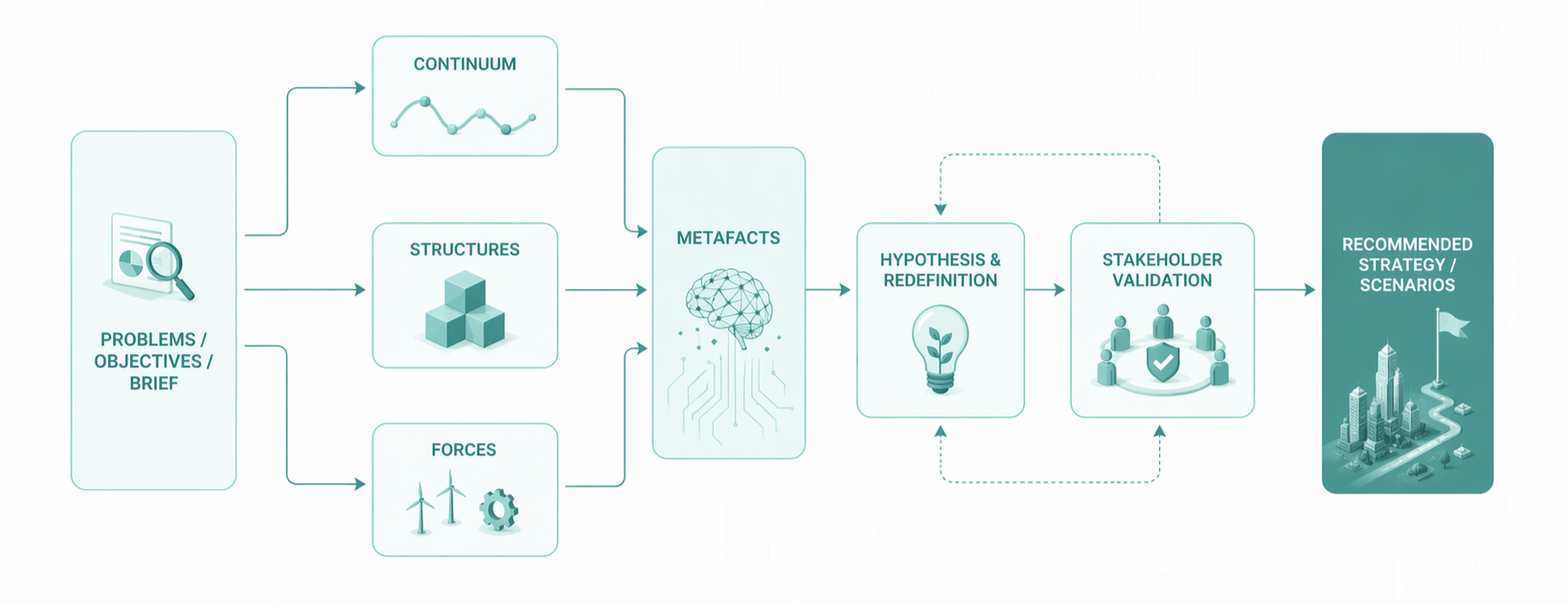
Continuum: what has persisted
Continuum is the slowest-moving lens. It captures the anchors that have held steady for decades, sometimes centuries, while everything on the surface has churned. Most strategy exercises skip this layer entirely. They assume the present and the future are enough. They are not. A strategy that contradicts the continuum rarely sticks.
We populate Continuum through four channels:
Historic behaviour patterns. How families make high-stakes decisions. The role authority and expertise play in earning trust. Long replacement cycles that breed emotional attachment and resistance to switching. Rituals that mark life-stage transitions in a household. Values that carry across generations even as lifestyles change.
Category continuities. What "premium" has always meant in your specific market. What customers refuse to compromise on, regardless of fashion. The job-to-be-done underneath a decade of changing feature sets. The aesthetic and symbolic codes the category has always traded in.
Organisational heritage. Your company's founding beliefs and long-held brand associations. The things your organisation has been credibly able to sell. The things it has tried and failed to sell, repeatedly. The internal stories people tell about what the company stands for.
Long-arc data. Category data across decades, not just the last five years. Patterns that only show up across economic cycles, policy regimes, and generational transitions. Historic pricing curves, demand cycles, and category elasticities. The view from 20,000 feet.
If your continuum analysis shows Indian consumers build trust through demonstrated durability, a strategy anchored in disposability will struggle no matter how good it looks on paper.
______________________________________________________________________________
Structures: What is true today
Structure is the present-moment lens. It captures the working reality of the organisation, the category, and the marketplace as they exist right now, separated from how they are described in decks or vision documents.
We populate Structures through four channels:
Company reality. Recent performance data, not the annual report summary. Current product portfolio and revenue mix. Market share against named competitors. The gap between what leadership believes is happening and what the numbers are actually doing.
Organisational dynamics. Hierarchy and reporting lines. Internal culture and how decisions actually get made. Incentive systems that either enable or block execution. The distance between stated vision and operational readiness. Where the bottlenecks sit and whether anyone is empowered to unblock them.
Market conditions. The competitive landscape as it stands, including new entrants that may not yet be on the strategy team's radar. Channel power and distribution realities. Regulatory environment. Customer segments that are over-served, under-served, or mis-served.
Known blind spots. Areas the organisation knows are relevant but has not yet studied. Questions that keep getting deferred to "next quarter." Segments, markets, or use cases that sit in nobody's job description. The forces your team senses but hasn't yet put evidence behind.
Structure is the reality check. It tells you what is deliverable today, and what has to change for a strategy to become more than a slide.
______________________________________________________________________________
Forces: what is coming
Forces are the future lens. It captures directional change: where technology, economics, culture, and behaviour are moving, at what speed, and at what depth of impact.
This is where the strategic foresight toolkit comes in. We map Forces in four sub-layers, each sitting at a different depth and time horizon.
Signals: Weak indicators at the edges.A behavioural shift in one neighbourhood. A niche innovation that hasn't yet crossed over. A pattern three buildings in Parel are exhibiting ahead of the rest of the city.
Example: In Mumbai's Parel towers, 15 to 20% of residents now hire "threshold coordinators" to manage their doorstep as a micro-logistics hub. The work covers packages, laundry, tailor drop-offs, and medical deliveries. It started with elderly residents and is spreading to young professionals.
The job with signals is to distinguish anomaly from archetype.
Trends: Patterns with momentum. Observable, measurable, and playing out across multiple contexts.
Example: Threshold Commerce. The apartment doorway is becoming the most valuable two square metres in urban retail. Buildings retrofitting lobbies into micro-fulfilment zones. Packaging redesigned for vertical transport. Services building doorstep interaction protocols.
We track 100+ active trends at any given time and narrow to the five to seven most likely to reshape a specific industry in the next 18 to 36 months.
Megatrends: currents that reorganise whole economies. Forces that persist for decades and cut across every industry.
Example: Vertical Urbanism. Human life reorganising along the Z-axis. It is changing how goods move (elevator capacity matters more than road access), how communities form (floor-based networks replacing street-based ones), how inequality feels (altitude as class marker), and how cities plan (vertical mixed-use replacing horizontal zoning).
We have mapped India and global megatrends annually for almost two decades. Our annual India Megatrends report is a proprietary product.
Drivers: the forces beneath the forces. The fundamentals moving everything above them. Demographic shifts, climate pressures, technological breakthroughs, value-system changes.
Example: Urban density intensification. Land scarcity, transport economics, and human psychology all adapting to compressed living. It is the driver beneath both Vertical Urbanism and Threshold Commerce.
Most trend reports stop at trends. We map drivers because they explain why your industry is changing, not just how.
______________________________________________________________________________
Metafacts to Strategy
Each lens, once populated, produces metafacts. A metafact is a small, discrete, evidence-backed unit. The opposite of a fluffy generalisation.
A continuum metafact might read: "In Indian premium consumer markets, trust is earned through demonstrated durability over three to five years, not through launch-day novelty."
A “structure” metafact might read: "The company's sales incentive system rewards volume”
A “forces” metafact might read: "Premium is increasingly being redefined around reduced cognitive effort rather than added features."
Metafacts are the bricks. Strategy is what we build with them.
Convergence: where three lenses point the same way
The sharpest strategic provocations emerge where all three lenses agree.
When continuum metafacts show trust is built through reliability, structure metafacts reveal feature overload in the category, and forces metafacts show growing demand for reduced cognitive effort, the hypothesis writes itself:
Premium is no longer about more features. It is about effortless value, delivered consistently over time.
A hypothesis born at the intersection of three lenses is stronger than one built from any single lens. It respects the past, works within the present, and moves with the future.
Validation under a sharper bar
Traditional research asks "do users want this today?" We ask "will this still hold as the future unfolds?"
Validation happens through mixed-method research: in-depth interviews, expert conversations, competitive analysis, quantitative sizing. The difference is the bar we set. We are not just testing present-day desirability. We are stress-testing against the future.
The output: strategy that holds across scenarios
We build three to five plausible scenarios around each strategic direction. The final deliverable is not a single prediction. It is a portfolio of strategic moves that work across multiple futures, with clear triggers for when to scale, pivot, or pause.
______________________________________________________________________________
What this looks like in practice
A global leader in computer peripherals: Opportunity mapping for India 2030 to 2035. A global leader in computer peripherals asked us to map India's hyper-digital future. We scanned 600+ signals, ran a 25-stakeholder internal workshop, and synthesised six thematic opportunity areas. Each theme was delivered with a short explainer video so senior leaders could take the insight into their own teams.
Government of Dubai: Megatrends-based economy foresight 2033. Brief: identify ten priority initiatives that make economic, social, and climate sense over the next decade. We referred to 25 reports and 50+ other sources, extracted 1,200+ signals, synthesised 52 trends, crafted 25+ opportunities, and narrowed to ten actionable “initiative cards” the client team can reuse year after year without external help.
A leading Indian conglomerate: Billion-dollar opportunity mapping 2030. We built the group’s own Megatrends Knowledge Universe, then ran envisioning workshops with 100 CXOs across business verticals. The output: ten megatrends at the intersection of geopolitics, technology, demography, and culture, generating 200 ideas that fed the next round of strategic detailing.
Two category-leading digital platforms: Customised 2026 megatrends reports. We fractured industry dynamics for each client across food delivery, media, and entertainment, and combined them with socio-technological shifts and emerging consumer behaviours. Both engagements closed with co-creation workshops that directly shaped their strategy teams’ 2026 planning.
A globally leading personal care brand: Baby care innovation foresight sprint. An eight-month engagement combining megatrend synthesis, primary research, and design thinking. 400+ metafacts extracted, ten product ideas detailed, two taken through to prototyping. Alongside the output, we trained the client team to run similar sprints in future.
Business Finland: India Futures Watch. Partner since 2013. India Signals in 2013 and 2014, collaborative workshops in Helsinki and Delhi, the MyHealth opportunity-mapping project for Finnish healthcare companies entering India, and the Future Watch India 2018 report identifying seven key trends shaping India’s trajectory.
______________________________________________________________________________
Why Turian Labs
Nearly two decades of Indian context. Since 2006 we have been mapping India's evolution with a depth global consultancies rarely match. Our annual India Megatrends study is a proprietary product. Thousands of user research sessions across tier 1, 2, and 3 cities sit beneath every India strategy we craft.
A global research network. 15+ countries across APAC, MENA, Southeast Asia, and South Asia. 12+ languages supported by native moderators and on-the-ground partners.
Three disciplines in one approach. Structured foresight, design thinking, and deep user research. No single lens can explain where the future is going.
We stay through execution. Most consultancies deliver a deck and leave. We stay on board. We help you implement, build internal capability, and adjust course when conditions change.
Track record
11 years leading foresight practice in India
40+ client organisations guided through transformation
900+ strategic projects delivered
8,000+ consumer and expert deep-dive interactions
1,500+ business leaders trained in futures and design thinking
92% client retention over five-plus years
Clients include Google (11-year partnership, seven countries, 60 to 80 projects a year), Samsung, YouTube, Government of Dubai, Business Finland, Aditya Birla Group, Mahindra Group, Swiggy, Disney+ Hotstar, and Nivea.
______________________________________________________________________________
Start a conversation
Book a foresight conversation. 30 minutes, no deck. Just a direct talk about where your strategy is running into uncertainty.
Request the India Mega trends 2026 briefing. Our latest annual map, delivered as a deck plus a 60-minute walkthrough.
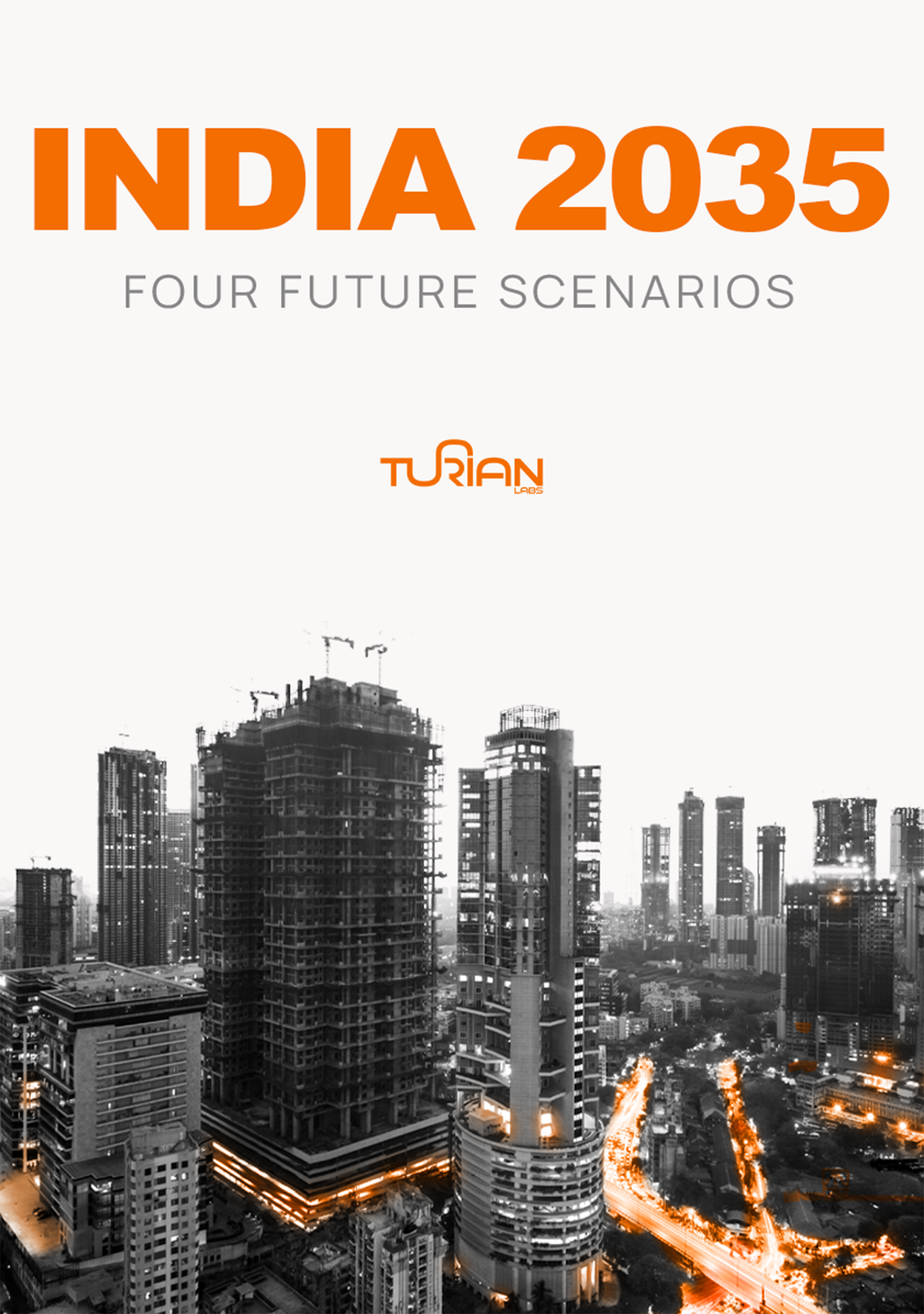
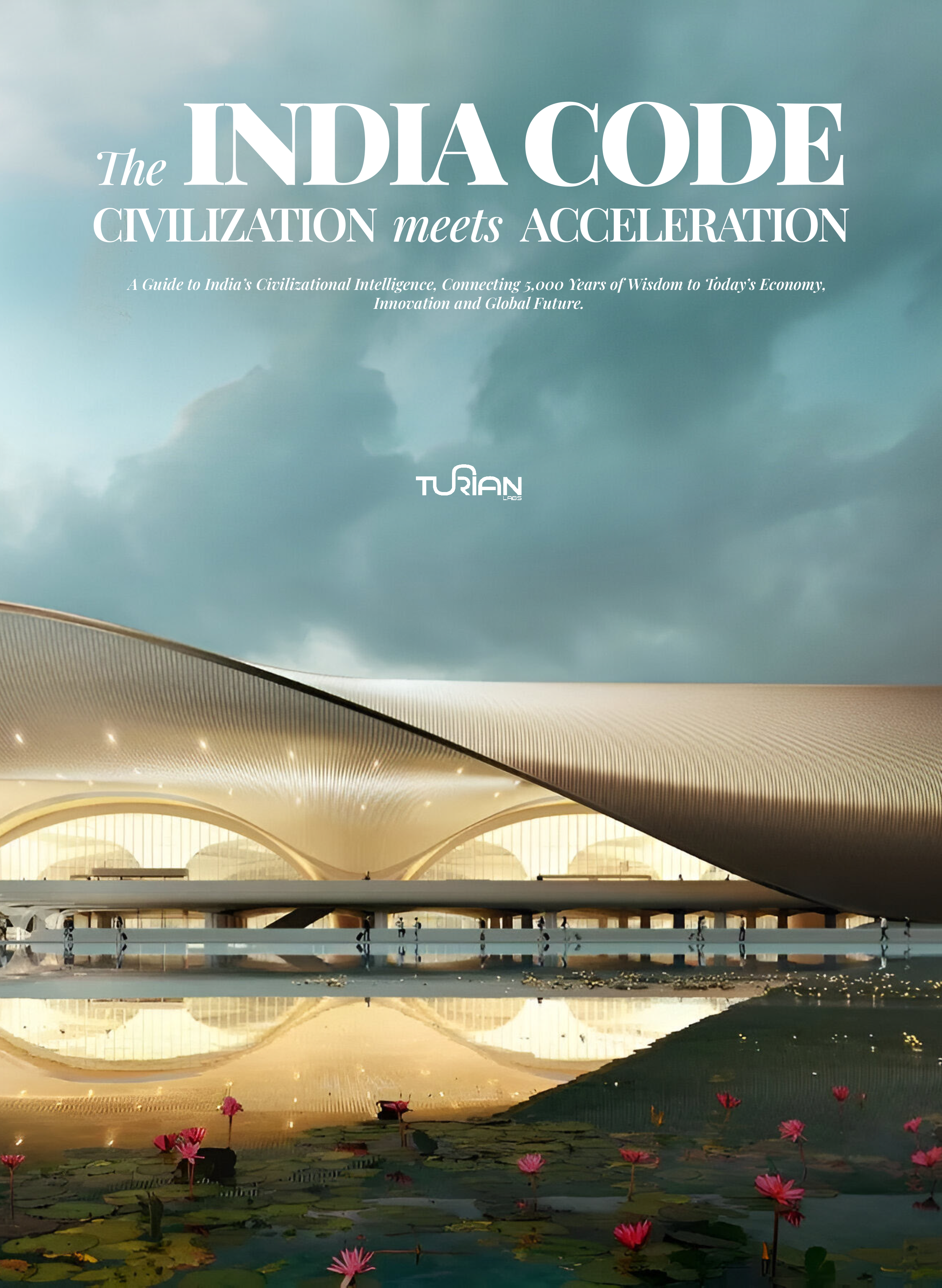
Explore our published work.India 2035: Four Future Scenarios and The India Code: Civilization Meets Acceleration, available on our Shareables page.
Want to learn more about Mega trends ? Follow our next Article - Seeing Further, Deciding Better
Do explore our research-backed perspectives on change, innovation, and what’s emerging next
TURIAN LABS
JANUARY 2026
NOVEMBER 2025
TURIAN LABS